5 minute read
7 minute read
For hundreds of years, animals have been part of Army life. Horses carried soldiers and supplies, mules hauled heavy loads, pigeons carried messages and dogs have worked alongside soldiers in some very important jobs.
Today, animals still have a special place in the Army. You can find military working dogs and ceremonial horses, and even some rather surprising regimental mascots. The British Army is also home to its very own Equestrian Association where riders at all levels can enjoy the sport and train in riding, jumping, and showmanship.
If working with animals in the Army is something you’d like to do, or you’re wondering if you can have a pet while serving, here’s what you should know.
Horses were once essential to military life. They carried soldiers into battle, moved supplies and ammunition, pulled artillery, and even helped carry wounded soldiers. During the First World War, the British Army relied on huge numbers of horses to keep things moving.
Mules were also used to carry loads, while camels helped soldiers travel across difficult terrain, and pigeons carried important messages.
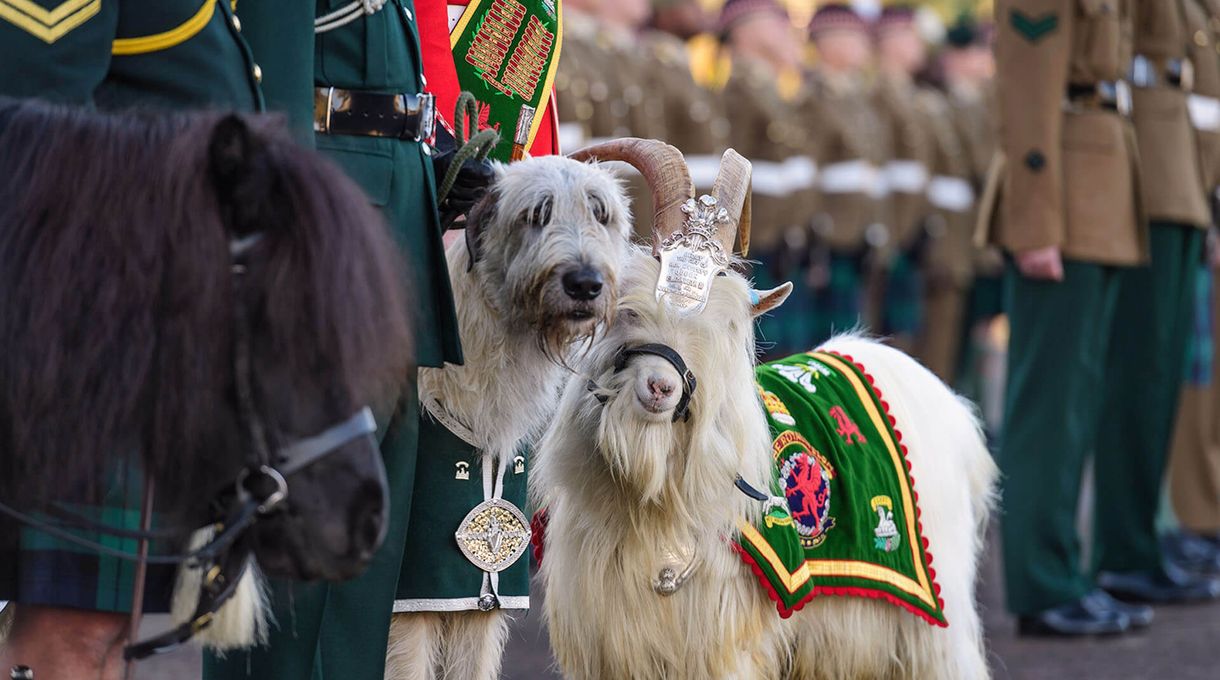
Since at least the 18th century, some Army regiments have even kept animals as mascots. They can help build team spirit, lift morale, and give a regiment its own special character.
And those animal mascots have had wonderfully unusual Army careers: like Pegasus V and Cruachan IV. These two Shetland ponies hold the ‘rank’ of Lance Corporal and serve with the Parachute Regiment and the Royal Regiment of Scotland, respectively.
If working with animals is important to you, the British Army has several career paths to choose from.
The Royal Army Veterinary Corps are the primary caretakers of all animals in the British Army, providing training and clinical care for military animals. The corps is also home to the 1st Military Working Dog Regiment. Dogs in this regiment are trained to locate IEDs, help clear surroundings, and guard and patrol key areas.
Veterinary Officer
If you're already a qualified veterinarian, you can become a Veterinary Officer in the British Army.
Veterinary Officers help keep military working animals fit, healthy and ready to work. They can care for horses and dogs, advise on animal health, and lead soldiers within the Royal Army Veterinary Corps.
Veterinary Nurse
Army Veterinary Nurses care for military animals alongside Army veterinarians. That can mean anything from helping an injured search dog to caring for a sick cavalry horse.
You could find yourself preparing an operating theatre one day and nursing animals the next. It’s a mix of animal care, clinical work and Army life.
Dog Handler
As an Army Dog Handler, you’ll work closely with a military working dog. You’ll train your dog to Army standards and may even work with protection dogs or specialist dogs who are trained to find arms and explosives.
You’ll be a real team. And while you’ll form a close bond with your military working dog, it’s important to remember that they’re colleagues, so you can't take them home at the end of the day.
Then, there’s the world-famous Household Cavalry Mounted Regiment. Known for their prestigious horsemanship, they lead ceremonial duties in London, across the UK, and around the world.
The ceremonial role will always be busy with having to look after the horses but it is also incredibly rewarding.
Josh W
The short answer is that it’s possible, but your living arrangements will play a big part.
If you’re living in Army accommodation, you’ll need to think about the type of home you have and whether it’s suitable for an animal or what happens when you’re away.
The most important thing to consider is the nature of being in the Army and whether your pet would be happy with an Army lifestyle.
Exercises, training, potential relocation, and time away from home are all part of Army life. You’ll need to have a trusted person or service that can look after them when you’re unable to.
There's also a chance that you’ll move to different types of accommodation during your Army career, so a pet that seems easy to look after now might need a very different routine later.
It’s important to take the time to think about what it means day-to-day and if you can provide the care and attention your pet will need.
Perhaps the best thing about the animals in the Army is that it can be wonderfully odd.
You might expect military mascots to be dogs or horses. But over the years, Army regiments have had goats, ponies, sheep and other animals as mascots.
And it shows just how much animals have added to Army life over the years.
They’ve carried loads, delivered messages, helped soldiers, supported ceremonial duties, and provided companionship. Today, the British Army’s military working animals still have important jobs, with dedicated teams training and caring for them every day.
If caring for animals sounds like your kind of career, explore the Royal Army Veterinary Corps and discover where you could fit in.
5 minute read
10 minute read