- .Regular Army
- .Find a Role
- .Veterinary Officer

- Medical
- Officer
- Specialist
- Regular
Veterinary Officer
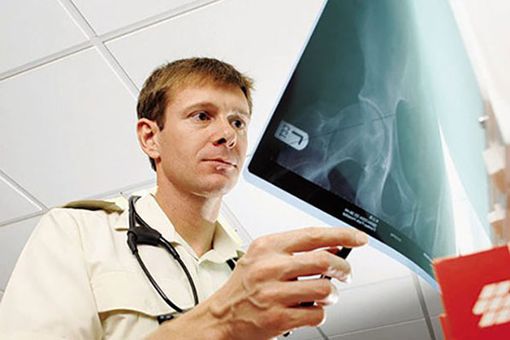
You make sure the military’s working animals are fit, well and ready to be deployed. Give expert advice, get qualifications and build a rewarding career.
Royal Army Veterinary Corps

Starting salary
£54,716

Age range
18 - 36

Student?
BURSARY AVAILABLE

Role details
Everything you need to know about the role, requirements and what you’ll gain.
Age
You can join between the ages of 18 – 36. At the time of your application you will need to be between 17 years & 9 months old and 36 years & 11 months old.
Fitness
Mid Thigh Pull 50kg
Medicine Ball Throw 2.7m
MSFT (beep test) level 7.1
Education
Veterinary Degree and Membership of the Royal College of Veterinary Surgeons
Need help?
Unsure about any requirements? Our recruitment team is here to help.
Royal Army Veterinary Corps
The Royal Army Veterinary Corps (RAVC) work mainly with military horses and dogs. Roles include vets, veterinary nurses and dog handlers.
From horses to dogs, the Army has hundreds of animals in its ranks. As a Veterinary Officer, you manage our Military Working Animals' capability and lead soldiers under your command.
You deal with animal health issues – the kind you’d find in civilian practice – but also veterinary challenges that only the Army can offer. You'll advise on disease controls and biosecurity, too. With the opportunity to boost your qualifications by getting the Certificate in Advanced Veterinary Practice. Develop your expertise and you can move up as a clinician or a commander.
All this, plus travel, sports and Adventurous Training, too.
Key responsibilities
Work in challenging and hostile environments
Take responsibility and make decisions
Lead and manage people
Use patience and a consistent approach to get the best out of animals
Carry out other military duties
Step 1
Having successfully completed the Army Officer Selection process and a Royal Army Veterinary Corps specialist interview, you will be awarded a place on the Commissioning Course Short at the Royal Military Academy, Sandhurst. You are taught basic military, survival and weapon-handling skills to prepare you for Army life. On completion of the course you will awarded a commission into the Royal Army Veterinary Corps.
Step 2
You will then attend the Royal Army Veterinary Corps Entry Officers' Course, which provides you with the specific knowledge required to begin your career as an Army Veterinary Officer.
Your salary will increase to £54,716 once you have finished training and joined your unit.
Student bursary (up to £60,000):
Open to candidates who will graduate with an Army endorsed veterinary degree and intend to join the Royal Army Veterinary Corps as a Vet for at least 4 years
Paid in annual instalments of £5,000 during your final three years of university then a lump sum of £45,000 on successful completion of Officer training
You may also be paid an Army salary or a lump sum of £5,000 during each of two years of professional development.
Apply while you are still at university, before the end of January. You should apply not later than your first year to qualify for the full amount; the Army reserves the right to award bursaries of 1, 2 or 3 years. You must pass the Army Officer Selection Board for professionally qualified officers and the Army Selection Board for Royal Army Veterinary Corps to qualify.
All Army Veterinary Officers can gain postgraduate qualifications throughout their career such as a Certificate of Advanced Veterinary Practice. You may also have the opportunity to study at MSc level.

Still studying? Receive up to £75,000 with a medical bursary while you're at uni
Your application journey
From application to training, you can expect a timeline of around 12 months.
Online application
Complete your application form online. You'll need details about your education, work history, and why you want to join the Army. You'll then be sent some medical forms to complete before you move to the next stage.
CV review
You'll be asked to send in a CV and cover letter outlining your experience and qualifications. This will then be reviewed by the Corps. Once you've been approved to continue your application, you'll be invited to a face to face medical exam, to ensure you're safe to continue to the next stage.
AOSB Main Board Short
Time to put your skills to the test You'll be invited to a shorter version of the Officer Selection Board. During your visit, you will be tested mentally and physically.
Familiarisation visit
Once you've passed officer selection, you'll be invited to visit the Royal Army Medical Services (RAMS) HQ on a familiarisation visit, where you'll get a better idea of what life is like as aa Medical Officer.
Arms Selection Board
you'll then be invited for an interview with a specialist board. This is where you'll talk to other experts in the same field as you, before you can confirm your place on the officer training course.
Preparation Course
Before you start your officer training on the RMAS Commissioning Course Short, you'll attend the Sandhurst Preparation Course, to ensure that you are fully prepared for the next stage in your career.
Real Army Life
Ask a Soldier
Get honest answers from real soldiers in the roles you’re interested in. Read previously asked questions or ask your own.
It is different for every vet. There is no one career pathway and every veterinary officer will have different opportunities that present themselves, and to be honest it is down to luck and where you are in your seniority (how long you have been in the army/rank/current role).
If you are looking for personal experience, I have had quite a clinical route so far. Having done an internship before I joined (extremely beneficial to have clinical practice before if you are interested in that route) I went straight into a Veterinary Officer role with the dogs. Looking after the operational dogs is not too taxing as they clearly have to be healthy! At 1MWD there are opportunities to do things with the troop, some sport etc… There isn’t loads of opportunities to do AT, it depends on who is in your chain of command and how they value it. Personally I have been lucky, I had done some skiing with OTC (SF1 and SF2) so could push to do SF3 and SL1 once I was in. Because it was worthwhile for the RAVC to have instructors! After the VO role I went into troop command.
Then otherwise I posted to the DATR and now I am in London working with the horses. It is what you make it, there are opportunities if you push for it but we are a small corps so they can’t let everyone go away all the time!
Tom
Royal Army Medical Services
During training you live with others on your course, and when you join your unit you’ll normally have your own room in the mess.
During officer training, you’ll live on site in shared accommodation. It’s designed to help you focus, build routines and get to know the people you’ll train alongside.
Sam J
Royal Artillery
As an officer we have a duty to look after our soldiers, physically but also mentally. We sometimes have to make difficult decisions, even when they’re not easy.
You’re given responsibility early on, but it’s introduced gradually. From the start, you’re trusted to look after yourself, your kit and support your team, with clear guidance and support in place. As you grow in confidence and skills, that responsibility increases. You’re never left to manage things alone. You’re shown what to do, why it matters, and how it fits into the bigger picture.
Jen C
Adjutant General's Corps
The Army has worked hard to improve its food options, with several choices available each day including hot meals and healthier options.
You’ll eat in the cookhouse, where meals are prepared for you each day. There’s a good choice, and it’s designed to keep you fuelled for training.
Rob H
Royal Armoured Corps
From day one you’re trained, supported and developed - you’re never left to figure things out alone.
You’re very well supported. Instructors are there to guide you, and don't forget, you join alongside others who are just as new, so you learn and settle in as a team.
Carlington R
Royal Engineers
Your future starts here
Every Veterinary Officer started exactly where you are now. Take the first step.
Not ready to apply? Get in touch

Contact us


Find a careers centre

More roles like this

Infantry Officer
Physiotherapist Officer