- .Regular Army
- .Find a Role
- .Network Engineer
/)
- Intelligence, IT & Comms
- Soldier
- Regular
Network Engineer
Join the front lines of the information battle and become a Royal Signals Network Engineer. Are you ready to step into a vital role where your technical skills can make a strategic impact?
Royal Signals

Starting salary
£27,282

Age range
16 - 36

Qualifications needed
GCSEs or equivalent
Role details
Everything you need to know about the role, requirements and what you’ll gain.
Age
You can join between the ages of 16 – 36. At the time of your application you will need to be between 15 years & 7 months old and 35 years & 11 months old.
You can start your training as a Junior Soldier at the Army Foundation College from the age of 16 years and 6 months.
Fitness
Mid Thigh Pull 50kg
Medicine Ball Throw 2.7m
2km run 11 min 30 sec
Education
GCSE grade 4/C, Scottish National 5 grade C, or above in Maths or ICT
and GCSE level 3/D, Scottish National 4, or above in English
or RQF level 2 equivalents.
Need help?
Unsure about any requirements? Our recruitment team is here to help.
Royal Signals
Royal Signals soldiers and officers provide the Army’s communications. They use radios, networks and information systems to keep units connected, helping information move quickly.
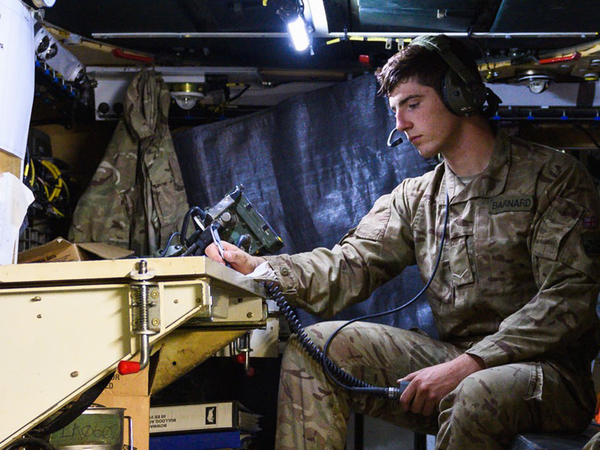
Step into an exciting career as a Communications Engineer in the Royal Signals, specialising as a Network Engineer. You’ll be responsible for installing and maintaining tactical networks that provide essential connectivity for our troops during missions and exercises. Working in dynamic environments, you’ll ensure the rapid deployment and smooth operation of the communication systems that are crucial for frontline success.
Where You'll Make a Difference:
Network Engineers are indispensable wherever military communications are needed. You'll find opportunities to serve not just within the Army, but across wider Defence sectors including:
Government Departments
Royal Air Force
Navy
Rangers
Special and Airborne Forces
Cyber Defence
Electronic Warfare
Bomb Disposal
Why Join Us?
Global Impact: Play a crucial role in military operations across the globe.
Diverse Experiences: Work with cutting-edge technology and a variety of communication systems.
Career Growth: Opportunities to develop and advance within a dynamic and essential field.
If you're passionate about technology and eager to make a real difference, join the Royal Signals as a Network Engineer and be a key player in the information battle.
Key responsibilities
Prepare, Configure, Deploy, and Maintain: You'll be responsible for tactical and operational communications systems, making sure they run flawlessly.
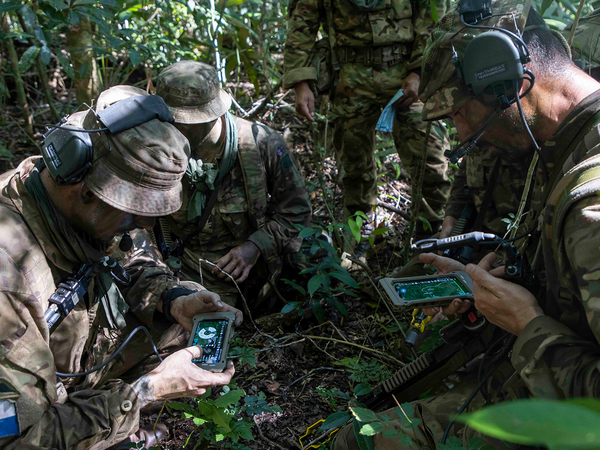
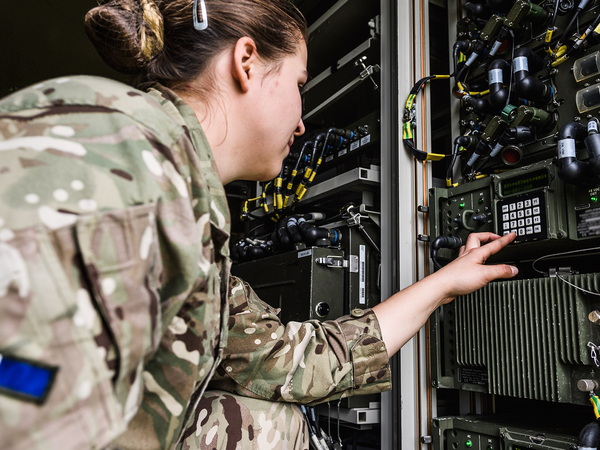
Engineer Diverse Systems: From radios and satellite systems to computer networks and mobile communications, you'll handle it all.
Support Software Applications: Provide essential support for a wide range of software applications, keeping everything running smoothly.
Step 1
Your initial military training teaches you how to be a soldier, covering everything from fieldcraft to how to handle a rifle.
If you join as a Junior Soldier (under 17 years and 6 months), you’ll do a basic military training (short) course at Harrogate.
If you join as a Regular Soldier (over 17 years and 6 months), you’ll do the regular adult basic training.
Step 2
This is the start of your technical training designed to introduce basic signalling and communication skills while building on your existing military skills. You will be taught basic principles and skills, such as siting, operating and talking on military radios, radio logs, map marking, working at heights, health and safety, and of course security. As your career progresses you learn how to build and configure networks, manage system problems as well as gain an understanding of field generators and security, including cyber.
You'll earn £27,282 a year from the start of your training. On completion of your initial trade training, your skills and level of qualifications then attract another pay increase.
Find out more about pay and benefits.
Driving Licences: CAT C + E
Level 4 Network Engineer Apprenticeship
Level 2 Functional Skills in Maths and English
Through life learning opportunities and education up to Masters Degree level including:
Level 4 Team Leading
Level 5 Coaching and Mentoring
Level 6 Leadership and Management
Level 7 PG Certificate in Wireless Communication
Professional Registration with the Institute of Engineering and Technology at ICT Tech, IEng and CEng Levels
Professional Registration with the British Computer Society at RIT Tech and CITP levels
Your application journey
From application to training, you can expect a timeline of around 3-6 months.

Timelines can vary based on individual circumstances.
Online application
Complete your application form online. You'll need details about your education, work history, and why you want to join the Army.
Individual Careers Discussion
Meet with an Army Recruiter who will discuss your application, answer questions, and guide you through the next steps.
Medical Checks
Next you'll have your medical records checked. This could take some time as it's a really important step to make sure it's safe for you to join.
Assessment centre
Attend a 2-day residential assessment where you'll complete fitness tests, cognitive assessments, medical examinations, and team exercises.
Security clearance
Background and security checks are conducted. This can take longer depending on your personal circumstances and history.
Real Army Life
Ask a Soldier
Get honest answers from real soldiers in the roles you’re interested in. Read previously asked questions or ask your own.
No week is the same in the Royal Signals, one week you could be conducting a training exercise with Multi-National Forces in America, tackling the Machu Picchu trail in Peru as part of an Adventurous Training Expedition.
Royal Signals are everywhere the British Army are deployed providing essential communications support, as such the breadth of opportunities are limitless.
A typical working week after training in barracks and when not deployed on operations:
Monday: (Late start) Maintenance of Comms equipment ensuring it is ready for deployment. PT.
Tuesday: PT. Continuation training military or trade.
Wednesday: Equipment care and Sports.
Thursday: PT. Personal Development.
Friday: Comms kit check. CO’s PT usually finished by midday.
Rosie
Royal Signals
Anybody who has a good general level of fitness will be absolutely fine. Basic training is about taking you from being fit to being Army fit.
You don’t need to arrive as a finished athlete. If you’re reasonably active and willing to put the effort in, you’ll improve quickly with training and support.
Greg H
Royal Military Police
It’s similar to a normal working day, with gyms, food halls and social spaces available on camp.
Living on a base gives you a good balance of structure and normal day‑to‑day life. Your days usually have a routine, like training, work and meals, but there’s also plenty of time to relax. You live close to the people you work with, so there’s a strong sense of community. In the evenings or downtime, you might go to the gym, watch TV, play sport or just catch up with mates. Everything you need is close by, which makes settling in much easier.
Holly J
Royal Adjutant's Corps
From day one you’re trained, supported and developed - you’re never left to figure things out alone.
You’re very well supported. Instructors are there to guide you, and don't forget, you join alongside others who are just as new, so you learn and settle in as a team.
Carlington R
Royal Engineers
Most days you finish work and can spend your evenings however you like, and you’re usually free to go away at weekends.
When you’re not on duty, your time is your own. Many people use evenings and weekends to relax, keep active, or spend time with friends on camp.
James M
Infantry
There truly is no job like being in the Army, where colleagues become your friends.
You’re living, training and working with the same people, so friendships build very quickly.
Yes. Everyone starts in the same position, learning together and supporting each other. That shared journey makes it easy to form friendships and feel like you belong.
Kelvin R
Infantry
Most people eat in the mess on a pay-as-you-dine basis, but if you live independently you can cook for yourself.
Most meals are provided for you in the mess during training. It’s a social part of Army life, and makes it easier to focus on your training and routine.
Tori C
Royal Army Medical Services
There are varied periods where you’ll be extremely busy and also periods where you could be having downtime at home with family and friends.
Not at all. Some parts are intense, especially during training or when learning something new, but it’s not like that all the time. You’ll have structured periods where you’re focused and pushed to do your best, but there’s also downtime to reset, socialise and look after yourself. That balance helps you grow without feeling overwhelmed.
Jen C
Adjutant General's Corps
The Army has worked hard to improve its food options, with several choices available each day including hot meals and healthier options.
You’ll eat in the cookhouse, where meals are prepared for you each day. There’s a good choice, and it’s designed to keep you fuelled for training.
Rob H
Royal Armoured Corps
I’ll usually have physical training in the morning, and for the rest of the day there can be lessons or tasks like servicing vehicles and weapons.
It’s a mix of both. You’ll spend time building your fitness, but just as much time learning new skills, from technical training to teamwork and leadership.
Steven R
Royal Logistic Corps
Phase 1 training will gradually push your limits, both physically and mentally, and you learn a lot about what you’re capable of.
Basic training is where you learn the fundamentals of Army life, from fitness and discipline to teamwork and core soldiering skills. It’s challenging, but you’re supported every step of the way as you build confidence and resilience.
Tori C
Royal Army Medical Services
Every day is different day in the Army, your not going to be doing the repetition of doing the same thing all the time because end of the day we have to adapt, we have to learn.
You could be on exercise for one whole week and the next week you could then be flying to somewhere else to do AT (Adventure Training), ski, snowboard.
Your day will usually follow a routine, with time for training, learning new skills and staying fit. There’s structure to help you progress, but every day brings something a bit different.
Craig D
Movement Controller
Your future starts here
Every Network Engineer started exactly where you are now. Take the first step.
Not ready to apply? Get in touch

Contact us


Find a careers centre

More roles like this
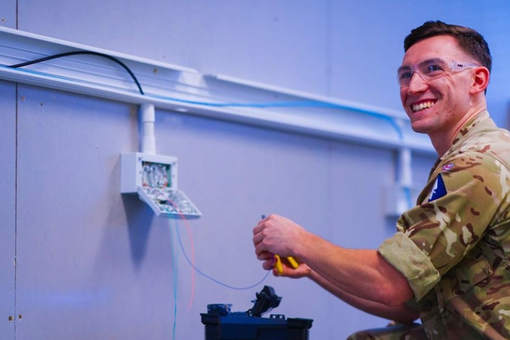
Communication Infrastructure Engineer
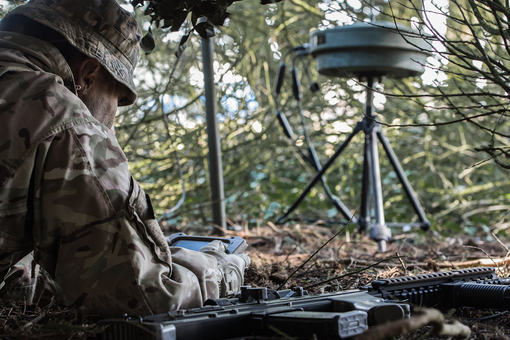
Electronic Warfare Signals Intelligence

Power Engineer
Part time opportunity
This role is also available in the Army Reserve
Serve part time as a Reserve Network Engineer while maintaining your civilian career. Train on evenings and weekends, with opportunities for overseas deployments and adventure training.

Commitment
27 days per year minimum

Training
Evenings and weekends

Benefits of Reserve service
- Earn extra income
- Gain world-class training
- Develop skills
- Close-knit local unit
- Deployment opportunities
