- .Regular Army
- .Find a Role
- .Communications Engineer

- Engineering
- Intelligence, IT & Comms
- Soldier
- Regular
Communications Engineer
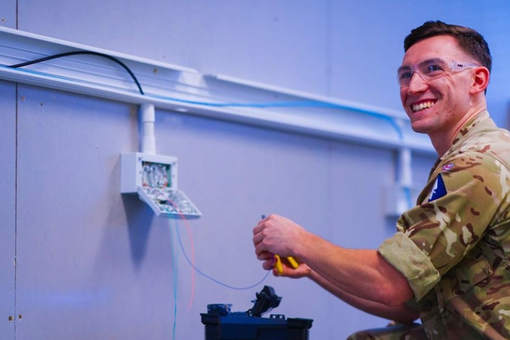
Are you ready for a challenging and rewarding career as a Communications Engineer? As part of the Royal Signals, you’ll work at the forefront of modern military communications, engineering the systems and networks that keep the UK Armed Forces connected, informed, and ahead of the adversary. Fight and win the information battle with the Royal Signals.
Royal Signals

Starting salary
£27,282

Age range
16 - 36

Qualifications needed
GCSEs or equivalent

Role details
Everything you need to know about the role, requirements and what you’ll gain.
Age
You can join between the ages of 16 – 36. At the time of your application you will need to be between 15 years & 7 months old and 35 years & 11 months old.
You can start your training as a Junior Soldier at the Army Foundation College from the age of 16 years and 6 months.
Fitness
Mid Thigh Pull 50kg
Medicine Ball Throw 2.7m
2km run 11 min 30 sec
Education
GCSE grade 4/C, Scottish National 5 grade C, or above in Maths or ICT
GCSE level 3/D, Scottish National 4, or above in English
or RQF level 2 equivalents.
Security Clearance Required:
CTC (Counter Terrorist Check)
SC (Security Check) at Phase 1 Training
Need help?
Unsure about any requirements? Our recruitment team is here to help.
Royal Signals
Royal Signals soldiers and officers provide the Army’s communications. They use radios, networks and information systems to keep units connected, helping information move quickly.
A Future Built on Innovation and Expertise
Joining the Royal Signals as a Communications Engineer offers more than just a job; it’s a career with purpose, challenge, and unparalleled growth. Whether you’re safeguarding our communications, managing vital data systems, or building the infrastructure that underpins military operations, you’ll be part of an elite technical Corps fighting and winning the information battle.
The Communications Engineer role is divided into three exciting specialisations:
Network Engineer: Build and maintain the networks that enable secure communication across the globe.
Information Services Engineer: Manage and protect critical data systems and information technology.
Communications Infrastructure Engineer: Design, install, and maintain the physical and digital infrastructure that supports military communications.
Why Join as a Communications Engineer?
Diverse Career Pathways: Beyond your core role, qualifying as a Communications Engineer opens doors to incredible opportunities. You could take part in prestigious ceremonial duties, serve with the elite Air Assault Signals or Special Forces, specialise in Cyber Defence or Special Communications, and operate in some of the most challenging and dynamic environments worldwide.
Continued Professional Development: Earn while you learn with world-class apprenticeships. Work towards industry-recognised qualifications in networking, information systems, and infrastructure engineering that are highly valued in both military and private sectors.
Technical Excellence: From configuring cutting-edge systems to maintaining global communications, you’ll master a broad range of technologies to keep our forces operational in any environment.
Global Opportunities: Serve as a Royal Signals soldier, supporting operations in diverse and dynamic environments wherever the UK Armed Forces are deployed.
Leadership Development: Build your skills as a leader, mentoring and guiding others as you progress in your career.
Take the First Step
Choose your specialisation: Network Engineer, Information Services Engineer, or Communications Infrastructure Engineer and begin a journey towards advanced qualifications, leadership, and a career that makes a difference. Apply now to join the Royal Signals as a Communications Engineer.
Key responsibilities
Depending on your specialisation, you could:
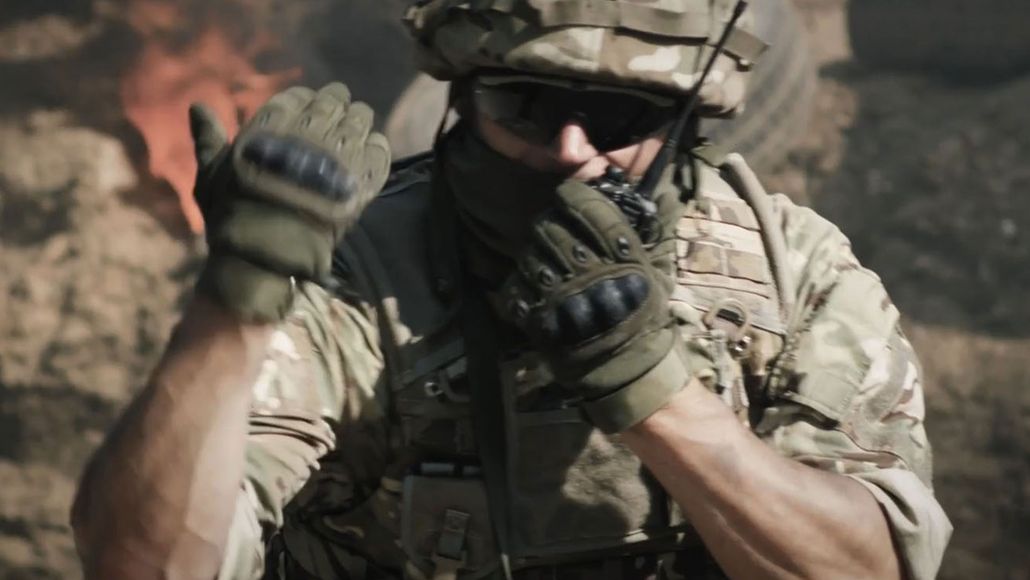
Engineer and maintain secure networks, including switches, routers, and servers.
Install and manage critical IT systems, ensuring seamless information sharing.
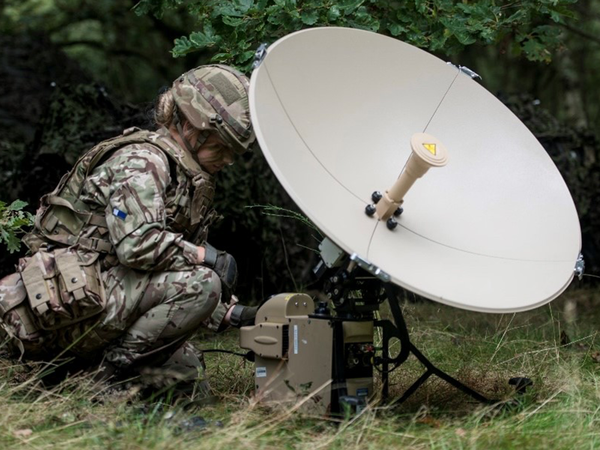
Plan and deploy robust communication infrastructure, including fibre optics and satellite systems.
Protect networks and information systems, integrating cybersecurity into every operation.
Work alongside military units, international allies, and industry partners to achieve Decision Advantage on the battlefield.
"AS A COMMUNICATIONS ENGINEER, YOU WILL HELP DEVELOP, DEPLOY AND MAINTAIN OUR BATTLE-WINNING COMMUNICATIONS."
Step 1
Your initial military training teaches you how to be a soldier, covering everything from fieldcraft to how to handle a rifle.
If you join as a Junior Soldier (under 17 years and 6 months), you’ll do a basic military training (short) course at Harrogate.
If you join as a Regular Soldier (over 17 years and 6 months), you’ll do the regular adult basic training.
Step 2
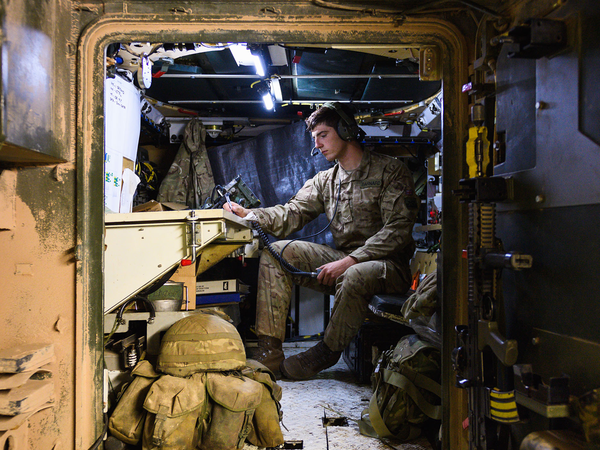
This is the start of your technical training designed to introduce basic signalling and communication skills while building on your existing military skills. You will be taught basic principles and skills, such as siting, operating and talking on military radios, radio logs, map marking, working at heights, health and safety, and of course security. As your career progresses you learn how to build and configure networks, manage system problems as well as gain an understanding of field generators and security, including cyber.
You'll earn £27,282 a year from the start of your training, which will go up as you progress throughout your career.
Find out more about pay and benefits.
Driving licences: B+E
Level 4 Network Engineer Apprenticeship
Level 2 Functional Skills in Maths, English and IT
Level 4 Certified Network Infrastructure Technician
Level 5 Certified Network Infrastructure Design Professional
Chartered Management Institute (CMI) Apprenticeships: Level 4 Team Leading, Level 5 Coaching and Mentoring, and Level 6 Leadership and Management
Professional Registration with the Institute of Engineering and Technology (IET) at ICT Tech, IEng and CEng levels
Professional Registration with the British Computer Society (BCS) at RIT Tech and CITP levels
Bachelor of Science in Engineering Management (Communications Management)
Through life learning opportunities and education up to Masters Degree level
Your application journey
From application to training, you can expect a timeline of around 3-6 months.

Timelines can vary based on individual circumstances.
Online application
Complete your application form online. You'll need details about your education, work history, and why you want to join the Army.
Individual Careers Discussion
Meet with an Army Recruiter who will discuss your application, answer questions, and guide you through the next steps.
Medical Checks
Next you'll have your medical records checked. This could take some time as it's a really important step to make sure it's safe for you to join.
Assessment centre
Attend a 2-day residential assessment where you'll complete fitness tests, cognitive assessments, medical examinations, and team exercises.
Security clearance
Background and security checks are conducted. This can take longer depending on your personal circumstances and history.
Real Army Life
Ask a Soldier
Get honest answers from real soldiers in the roles you’re interested in. Read previously asked questions or ask your own.
No week is the same in the Royal Signals, one week you could be conducting a training exercise with Multi-National Forces in America, tackling the Machu Picchu trail in Peru as part of an Adventurous Training Expedition.
Royal Signals are everywhere the British Army are deployed providing essential communications support, as such the breadth of opportunities are limitless.
A typical working week after training in barracks and when not deployed on operations:
Monday: (Late start) Maintenance of Comms equipment ensuring it is ready for deployment. PT.
Tuesday: PT. Continuation training military or trade.
Wednesday: Equipment care and Sports.
Thursday: PT. Personal Development.
Friday: Comms kit check. CO’s PT usually finished by midday.
Rosie
Royal Signals
I’ll usually have physical training in the morning, and for the rest of the day there can be lessons or tasks like servicing vehicles and weapons.
It’s a mix of both. You’ll spend time building your fitness, but just as much time learning new skills, from technical training to teamwork and leadership.
Steven R
Royal Logistic Corps
Phase 1 training will gradually push your limits, both physically and mentally, and you learn a lot about what you’re capable of.
Basic training is where you learn the fundamentals of Army life, from fitness and discipline to teamwork and core soldiering skills. It’s challenging, but you’re supported every step of the way as you build confidence and resilience.
Tori C
Royal Army Medical Services
Every day is different day in the Army, your not going to be doing the repetition of doing the same thing all the time because end of the day we have to adapt, we have to learn.
You could be on exercise for one whole week and the next week you could then be flying to somewhere else to do AT (Adventure Training), ski, snowboard.
Your day will usually follow a routine, with time for training, learning new skills and staying fit. There’s structure to help you progress, but every day brings something a bit different.
Craig D
Movement Controller
It’s similar to a normal working day, with gyms, food halls and social spaces available on camp.
Living on a base gives you a good balance of structure and normal day‑to‑day life. Your days usually have a routine, like training, work and meals, but there’s also plenty of time to relax. You live close to the people you work with, so there’s a strong sense of community. In the evenings or downtime, you might go to the gym, watch TV, play sport or just catch up with mates. Everything you need is close by, which makes settling in much easier.
Holly J
Royal Adjutant's Corps
Your future starts here
Every Communications Engineer started exactly where you are now. Take the first step.
Not ready to apply? Get in touch

Contact us


Find a careers centre

More roles like this

Information Services Engineer

Network Engineer