- .Regular Army
- .Find a Role
- .Postal and Courier Operator

- Logistics & Support
- Soldier
- Regular
Postal and Courier Operator
Postal and Courier Operators play an essential role in maintaining one of the Army's vital lines of communication as well as keeping the morale of troops high.
Royal Logistic Corps

Starting salary
£27,282

Age range
16 - 36

Role details
Everything you need to know about the role, requirements and what you’ll gain.
Age
You can join between the ages of 16 – 36. At the time of your application you will need to be between 15 years & 7 months old and 35 years & 6 months old.
You can start your training as a Junior Soldier at the Army Foundation College from the age of 16 years and 6 months.
Fitness
Mid Thigh Pull 50kg
Medicine Ball Throw 2.7m
2km run 11 min 30 sec
Education
GCSE Grade A–D/9-3, or Scottish National 4, in Maths and English Language
Need help?
Unsure about any requirements? Our recruitment team is here to help.
Royal Logistic Corps
Royal Logistic Corps (RLC) soldiers work with all units of the British Army, and are found all over the UK, and are deployed worldwide.
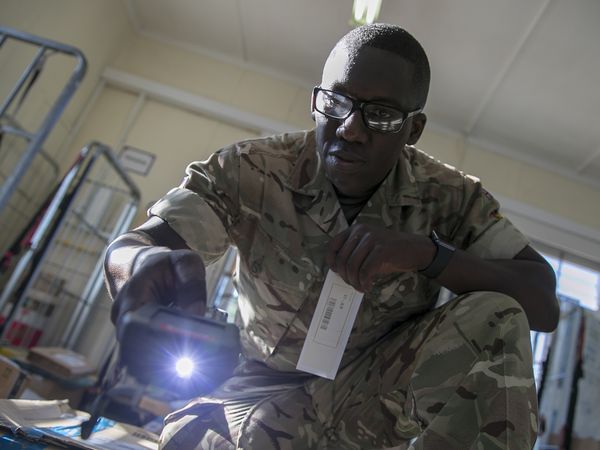
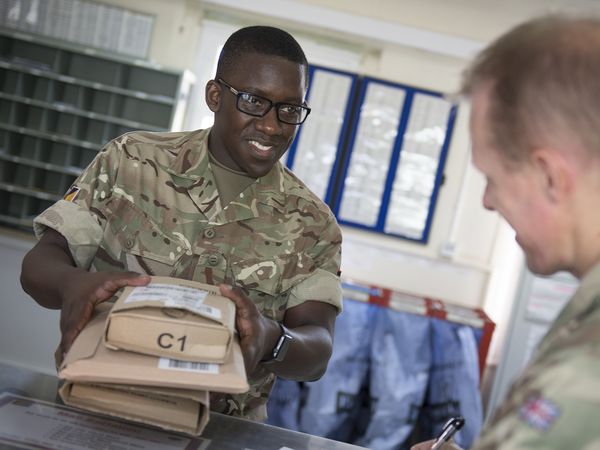
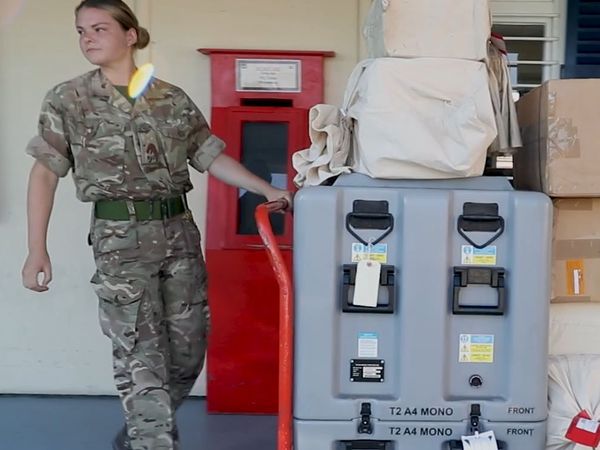
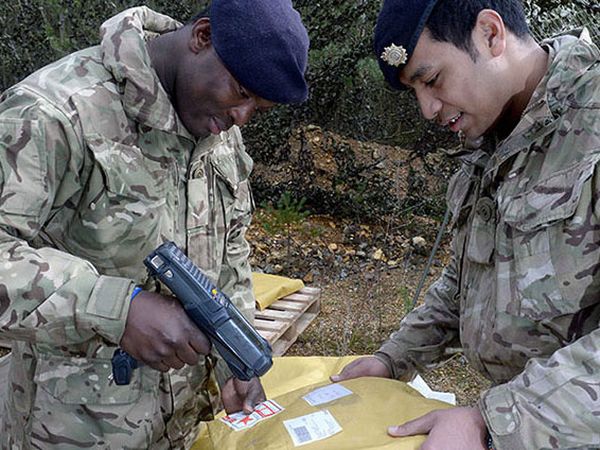
Getting mail delivered isn't just important in the Army - it's vital. As a Postal and Courier Operator, you'll play a key role in getting mail to soldiers, sailors and aircrew so they can stay in touch with friends and family. You'll train as a courier, mail guard, counter clerk and sorter, learning how to use the latest IT and satellite communication systems. You will work in the Secure courier network, safeguarding and distributing Protectively Marked Material in the UK and overseas.

Key responsibilities
Run your own Post Office using state-of-the-art IT systems to handle large amounts of cash and stock
Work with all types of mail - both official and private
You'll be based at South Cerney in Gloucestershire with opportunities to be deployed worldwide
Deploy all over the world on exercise and operations - wherever your expertise is needed
Gain your Level 2 Apprenticeship
Earn your category B Driving Licence
Step 1
You'll start with your initial military training which teaches you how to be a soldier, covering everything from fieldcraft to how to handle a rifle.
If you join as a Junior Soldier (under 17 years and 6 months), you’ll do a basic military training (long) course at Harrogate.
If you join as a Regular Soldier (over 17 years and 6 months), you’ll do the regular adult basic training.
Step 2
Next, you’ll take a four-week course at the Defence College of Logistics, Policing and Administration in Worthy Down, Winchester. This teaches you to use our systems which help us track and trace mail all over the world. You also learn how to deal with Top Secret material. You will earn your category B driving license at the Defence School of Transport.
Step 3
Your Class 2 is awarded after 12 months on the job training and completion of all RLC PC Op Class 2 training objectives. You are then eligible to upgrade to a Class 1 Postal and Courier Operator on selection for promotion to Lance Corporal.
You'll earn £27,282 a year from the start of your training, which will go up as you progress throughout your career.
Category B Driving Licence
Level 2 Express Delivery Apprenticeship
Defence Awarding Organisation (DOA) - Level 4 Award in Management of Postal and Courier Services
Defence Awarding Organisation (DOA) - Level 2 and 3 Award in Postal Accounting Management Transactions
IWFM - Level 4 in Facilities Management
Levels 2 and 3 Certificate in Logistics and Transport
Levels 5 and 6 Diploma in Logistics and Transport
Your application journey
From application to training, you can expect a timeline of around 3-6 months.

Timelines can vary based on individual circumstances.
Online application
Complete your application form online. You'll need details about your education, work history, and why you want to join the Army.
Individual Careers Discussion
Meet with an Army Recruiter who will discuss your application, answer questions, and guide you through the next steps.
Medical Checks
Next you'll have your medical records checked. This could take some time as it's a really important step to make sure it's safe for you to join.
Assessment centre
Attend a 2-day residential assessment where you'll complete fitness tests, cognitive assessments, medical examinations, and team exercises.
Security clearance
Background and security checks are conducted. This can take longer depending on your personal circumstances and history.
Real Army Life
Ask a Soldier
Get honest answers from real soldiers in the roles you’re interested in. Read previously asked questions or ask your own.
The RLC is the largest Corps in the British Army and wherever in the world you find the Army, you’ll find us… Travel, Promotion, Sport, Adventure and Challenge – we’ve got it all.
Life in the RLC is varied and worldwide. You could be training in the UK one month and supporting operations overseas the next. Alongside your trade, you’ll get chances to travel, play sport and take on new challenges.
Heidi
Royal Logistic Corps
Phase 1 training will gradually push your limits, both physically and mentally, and you learn a lot about what you’re capable of.
Basic training is where you learn the fundamentals of Army life, from fitness and discipline to teamwork and core soldiering skills. It’s challenging, but you’re supported every step of the way as you build confidence and resilience.
Tori C
Royal Army Medical Services
It’s similar to a normal working day, with gyms, food halls and social spaces available on camp.
Living on a base gives you a good balance of structure and normal day‑to‑day life. Your days usually have a routine, like training, work and meals, but there’s also plenty of time to relax. You live close to the people you work with, so there’s a strong sense of community. In the evenings or downtime, you might go to the gym, watch TV, play sport or just catch up with mates. Everything you need is close by, which makes settling in much easier.
Holly J
Royal Adjutant's Corps
Most people eat in the mess on a pay-as-you-dine basis, but if you live independently you can cook for yourself.
Most meals are provided for you in the mess during training. It’s a social part of Army life, and makes it easier to focus on your training and routine.
Tori C
Royal Army Medical Services
Your future starts here
Every Postal and Courier Operator started exactly where you are now. Take the first step.
Not ready to apply? Get in touch

Contact us


Find a careers centre

More roles like this
 Featured
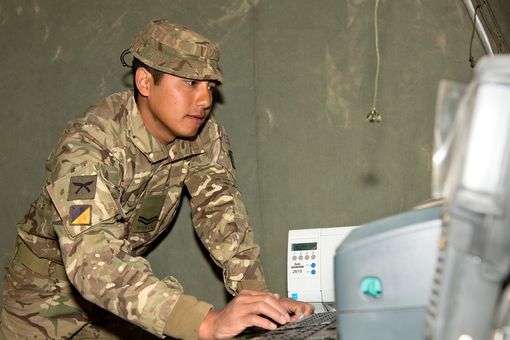
Supply Chain Operator
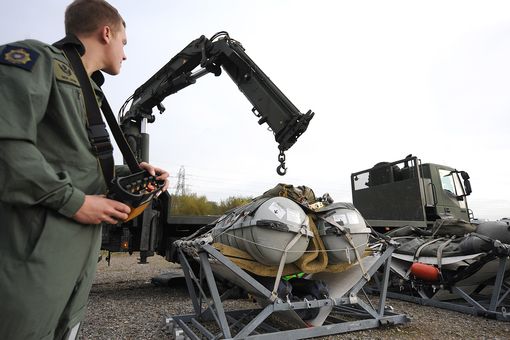
Driver Air Despatch
 Featured