- .Regular Army
- .Find a Role
- .Construction Materials Technician

- Engineering
- Soldier
- Regular
Construction Materials Technician
Take on one of the Army’s most varied jobs. Build up experience, take qualifications and choose from a range of career paths.

Royal Engineers

Starting salary
£27,282

Age range
16 - 36

Role details
Everything you need to know about the role, requirements and what you’ll gain.
Age
You can join between the ages of 16 – 36. At the time of your application you will need to be between 15 years & 7 months old and 35 years & 6 months old.
You can start your training as a Junior Soldier at the Army Foundation College from the age of 16 years and 6 months.
Fitness
Mid Thigh Pull 50kg
Medicine Ball Throw 3m
2km run 11 min
Education
GCSE Grade A–C/9-5, or Scottish National 5 grade A-C, in Maths, and GCSE Grade A–C/9-4, or Scottish National 5 grade A-C, in English Language and one other subject.
Need help?
Unsure about any requirements? Our recruitment team is here to help.
Royal Engineers
The Royal Engineers (RE) are multi-skilled soldiers, combat engineers and tradespeople, providing essential support to all areas of the British Army.
If you want a varied job, Construction Materials Technician (CMT) is a good choice. You could be out in the field, carrying out combat engineering. Or you could work in a specialist materials testing unit – a laboratory – being sent on operations at short notice. You might inspect airfields across the world through ground investigations or work in quality control, making sure that roads are built as they should be. With this experience, plus the chance to take qualifications, you can build a great CV and an exciting future. Sports and Adventurous Training mean there are lots of challenges off duty, too.
Construction Material Technician is a Specialist role in the Royal Engineers. All the Royal Engineer soldier job roles are divided into 5 groups. When you apply to the Engineers, you will apply to the trade group rather than the specific trade. More about types of roles in the Royal Engineers.
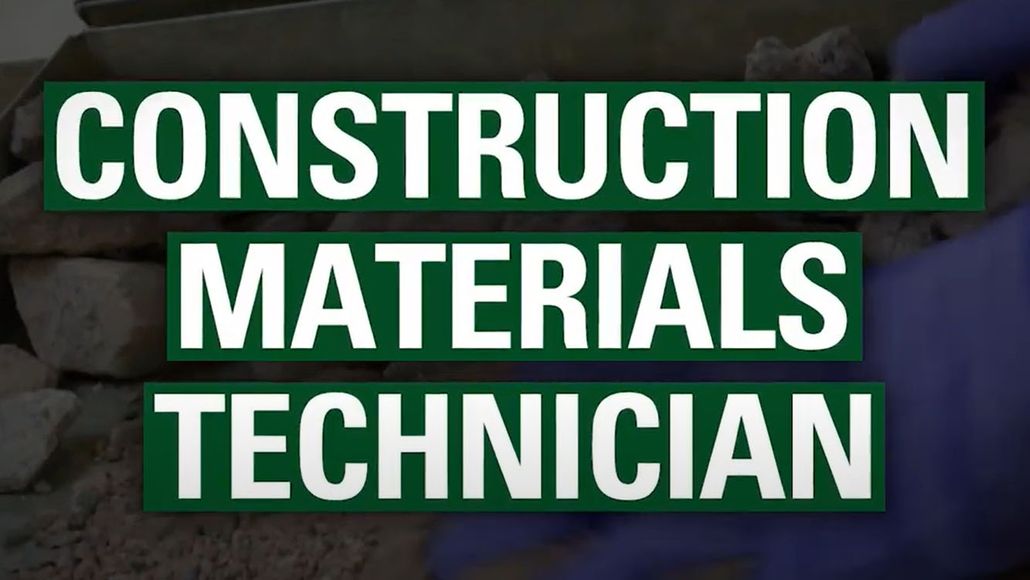
Key responsibilities
Geotechnical technician - test soil, rock and groundwater
Carry out site and ground investigation
Quality assurance
Quality control of construction materials including soils, aggregates and concretes
Laboratory testing of construction materials
Ground contamination surveyor - assesses soil and groundwater for hazardous pollutants
Geophysical surveyor - use non-invasive technology to map what lies beneath the earth's surface
Step 1
Your initial military training teaches you how to be a soldier, covering everything from fieldcraft to how to handle a rifle.
If you join as a Junior Soldier (under 17 years and 6 months), you’ll do the basic military training (short) course at Harrogate.
If you join as a Regular Soldier (over 17 years and 6 months), you’ll do the regular adult basic training.
Step 2
Then it’s off to the Royal School of Military Engineering Regiment near Camberley, Surrey, for 12 weeks. Here, you learn military engineering skills, such as knots and lashings, demolition, mine warfare and bridge building. Finally, you go the Royal School of Military Engineering in Chatham, Kent, for 20 weeks. You'll learn how to carry out ground and site investigations, and test soils, concrete and other construction materials in a laboratory.
You'll earn £27,282 a year from the start of your training, which will go up as you progress throughout your career.
Car and HGV driving licence
Level 3 and Level 5 Diploma in Construction Materials Technology

Your application journey
From application to training, you can expect a timeline of around 3-6 months.

Timelines can vary based on individual circumstances.
Online application
Complete your application form online. You'll need details about your education, work history, and why you want to join the Army.
Individual Careers Discussion
Meet with an Army Recruiter who will discuss your application, answer questions, and guide you through the next steps.
Medical Checks
Next you'll have your medical records checked. This could take some time as it's a really important step to make sure it's safe for you to join.
Assessment centre
Attend a 2-day residential assessment where you'll complete fitness tests, cognitive assessments, medical examinations, and team exercises.
Security clearance
Background and security checks are conducted. This can take longer depending on your personal circumstances and history.
Real Army Life
Ask a Soldier
Get honest answers from real soldiers in the roles you’re interested in. Read previously asked questions or ask your own.
Anybody who has a good general level of fitness will be absolutely fine. Basic training is about taking you from being fit to being Army fit.
You don’t need to arrive as a finished athlete. If you’re reasonably active and willing to put the effort in, you’ll improve quickly with training and support.
Greg H
Royal Military Police
It’s similar to a normal working day, with gyms, food halls and social spaces available on camp.
Living on a base gives you a good balance of structure and normal day‑to‑day life. Your days usually have a routine, like training, work and meals, but there’s also plenty of time to relax. You live close to the people you work with, so there’s a strong sense of community. In the evenings or downtime, you might go to the gym, watch TV, play sport or just catch up with mates. Everything you need is close by, which makes settling in much easier.
Holly J
Royal Adjutant's Corps
From day one you’re trained, supported and developed - you’re never left to figure things out alone.
You’re very well supported. Instructors are there to guide you, and don't forget, you join alongside others who are just as new, so you learn and settle in as a team.
Carlington R
Royal Engineers
Phase 1 training will gradually push your limits, both physically and mentally, and you learn a lot about what you’re capable of.
Basic training is where you learn the fundamentals of Army life, from fitness and discipline to teamwork and core soldiering skills. It’s challenging, but you’re supported every step of the way as you build confidence and resilience.
Tori C
Royal Army Medical Services
You can expect to travel all over the world as a Royal Engineer. In my nearly 15 years in the military as a serving Royal Engineer I have deployed on operations and exercises all over the the UK, Germany, Cyprus, Afghanistan, Turkey, Italy, France and Belgium.
As a Royal Engineer, you can expect opportunities to work and train in the UK and overseas. Sappers support operations globally, using their skills to solve real-world engineering challenges in different environments and alongside a wide range of Army units.
Rob Needham
Royal Engineers
Your future starts here
Every Construction Materials Technician started exactly where you are now. Take the first step.
Not ready to apply? Get in touch

Contact us


Find a careers centre

More roles like this

Surveyor

Geographic Technician
