- .Regular Army
- .Find a Role
- .Operator Technical Intelligence

- Intelligence, IT & Comms
- Soldier
- Regular
Operator Technical Intelligence
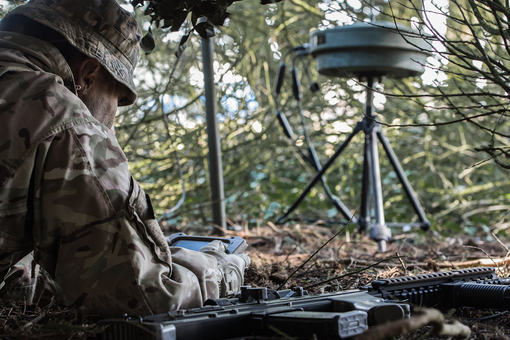
Being an Operator Technical Intelligence (OPTI) is a specialist trade. It focuses on Signals Intelligence, Cyber, or Languages. Much of this work supports covert and sensitive operations.
Intelligence Corps

Starting salary
£27,282 - £35,310

Age range
18 - 35

Role details
Everything you need to know about the role, requirements and what you’ll gain.
Age
You can join between the ages of 18 – 35. At the time of your application you will need to be between 17 years & 6 months old and 35 years & 6 months old.
Fitness
Mid Thigh Pull 50kg
Medicine Ball Throw 2.7m
2km run 11 min 30 sec
Education
5x GCSEs grade C/5, Scottish National 5 grade C, or above in Maths, English and 3 other subjects.
Security Clearance Required:
CTC (Counter Terrorist Check)
SC (Security Check) at Phase 1Training
DV (Developed Vetting) at Phase 2 Training
Need help?
Unsure about any requirements? Our recruitment team is here to help.
Intelligence Corps
The Intelligence Corps are responsible for information gathering and intelligence analysis. Helping to support planning and informing decision making for operations.
You'll specialise in intercepting and analysing communications, working throughout with highly sensitive systems. All OPTIs are taught the basics of Signals Intelligence (SIGINT), with the option to also learn a foreign language to a high level. Alternatively, you can go on to specialise in Cyber warfare.
You don't need a technical background and you don't have to speak any foreign languages to apply – we’ll train you and you’ll be paid throughout that training. Training takes around 2-3 years and includes time spent learning about electronic warfare in a field unit, an 18-month language course, and an overseas placement to refine your language skills.
You'll normally be employed in the UK, with options for overseas deployments later on in your career. If you are already multilingual, we’ll enhance these skills and there’ll always be opportunities to use your languages in support of live operations.
Key responsibilities
Specialise in collecting sensitive information about the enemy
Become an expert in piecing together sensitive information and turning it into intelligence
Use your analysis and assessment to influence operations
Gain valuable qualifications and continuously improve as an intelligence operator
Work within highly sensitive areas and departments
Step 1
Your initial basic military training teaches you how to be a soldier, covering everything from fieldcraft to how to handle a rifle. This training will be at Pirbright, Surrey, or Winchester, Hampshire.
Step 2
Phase 2 training takes place at the Defence Intelligence Training Group near Bedford. You'll do an initial 15-week course in the foundations of technical intelligence analysis. On successful completion of this, you'll progress on to the Junior Command and Leadership course to promote to the rank of Lance Corporal. You will then receive additional training in analysis and/or cyber skills and/or an operational language. This training will take between three and 18 months. If you are going on to be a linguist, you will undertake a further 18 months of intensive language training.
Earn £27,282 during training.
On completion of Phase 2 training you will join your unit as a Lance Corporal earning £35,310 a year.
Additional pay for learning languages, which vary depending on the language itself and your level of proficiency.
Level 4 Data Analyst Apprenticeship
Funding towards undergrad and post-grad qualifications
Other intelligence specific training
From Sept 2026 - Level 7 Systems Thinking Practitioner Apprenticeship

Your application journey
From application to training, you can expect a timeline of around 3-6 months.

Timelines can vary based on individual circumstances.
Online application
Complete your application form online. You'll need details about your education, work history, and why you want to join the Army.
Individual Careers Discussion
Meet with an Army Recruiter who will discuss your application, answer questions, and guide you through the next steps.
Medical Checks
Next you'll have your medical records checked. This could take some time as it's a really important step to make sure it's safe for you to join.
Assessment centre
Attend a 2-day residential assessment where you'll complete fitness tests, cognitive assessments, medical examinations, and team exercises.
Security clearance
Background and security checks are conducted. This can take longer depending on your personal circumstances and history.
Real Army Life
Ask a Soldier
Get honest answers from real soldiers in the roles you’re interested in. Read previously asked questions or ask your own.
As an OPMI or an OPTI you will have an exciting and varied career.
As an OPMI you can expect to work in a number of specialisms, Including, but not limited to, Counter Intelligence, Human Intelligence and Operational Intelligence. You can expect to work at all levels of the command structure, from infantry companies all the way up to providing support at an operational level.
As an OPTI your career will be spent mainly in the Signals Intelligence field. You may also have opportunities to specialise in languages and cyber. You will work closely with EW operators of the Royal Signals as an OPTI.
Both roles are highly deployable and you can expect to either go on or support operations in your first few years of service.
Paul
Military Intelligence
All specialist roles in the Int Corps are open to both officers and soldiers. Essentially the key difference is if you want to be the management and direction behind the intelligence team (officer) or undertaking the intelligence work in itself (soldier).
Whether you choose to be an officer or a soldier, you’ll be part of the same Intelligence Corps team - working together to gather, analyse and act on critical information. Officers focus on leading teams and shaping how intelligence supports the mission, while soldiers specialise in delivering the intelligence itself. Both roles are hands-on, highly valued, and play a key part in helping the Army make informed decisions on operations.
Paul
Military Intelligence
Anybody who has a good general level of fitness will be absolutely fine. Basic training is about taking you from being fit to being Army fit.
You don’t need to arrive as a finished athlete. If you’re reasonably active and willing to put the effort in, you’ll improve quickly with training and support.
Greg H
Royal Military Police
It’s similar to a normal working day, with gyms, food halls and social spaces available on camp.
Living on a base gives you a good balance of structure and normal day‑to‑day life. Your days usually have a routine, like training, work and meals, but there’s also plenty of time to relax. You live close to the people you work with, so there’s a strong sense of community. In the evenings or downtime, you might go to the gym, watch TV, play sport or just catch up with mates. Everything you need is close by, which makes settling in much easier.
Holly J
Royal Adjutant's Corps
From day one you’re trained, supported and developed - you’re never left to figure things out alone.
You’re very well supported. Instructors are there to guide you, and don't forget, you join alongside others who are just as new, so you learn and settle in as a team.
Carlington R
Royal Engineers
I’ll usually have physical training in the morning, and for the rest of the day there can be lessons or tasks like servicing vehicles and weapons.
It’s a mix of both. You’ll spend time building your fitness, but just as much time learning new skills, from technical training to teamwork and leadership.
Steven R
Royal Logistic Corps
Your future starts here
Every Operator Technical Intelligence started exactly where you are now. Take the first step.
Not ready to apply? Get in touch

Contact us


Find a careers centre

More roles like this
 Featured
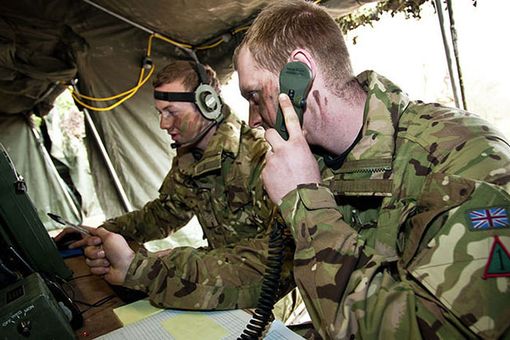
Operator Military Intelligence