- .Regular Army
- .Find a Role
- .Infantry Guardsman
/)


Role details
Everything you need to know about the role, requirements and what you’ll gain.
Age
You can join between the ages of 16 – 36. At the time of your application you will need to be between 15 years & 7 months old and 35 years & 6 months old.
You can start your training as a Junior Soldier at the Army Foundation College from the age of 16 years.
Fitness
Mid Thigh Pull 76kg
Medicine Ball Throw 3.1m
2km run 10 min 15 sec
Education
No formal qualifications needed
Need help?
Unsure about any requirements? Our recruitment team is here to help.

Infantry
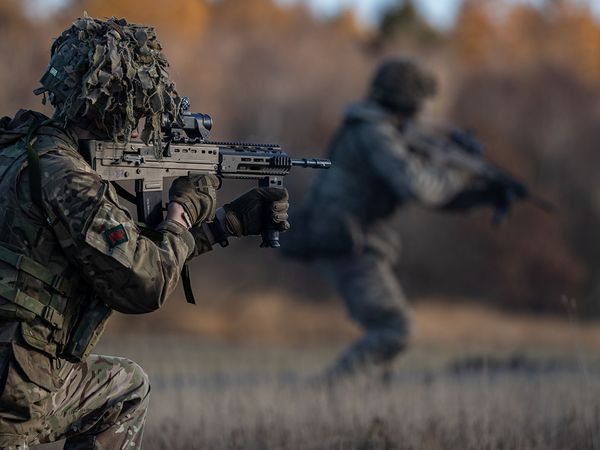
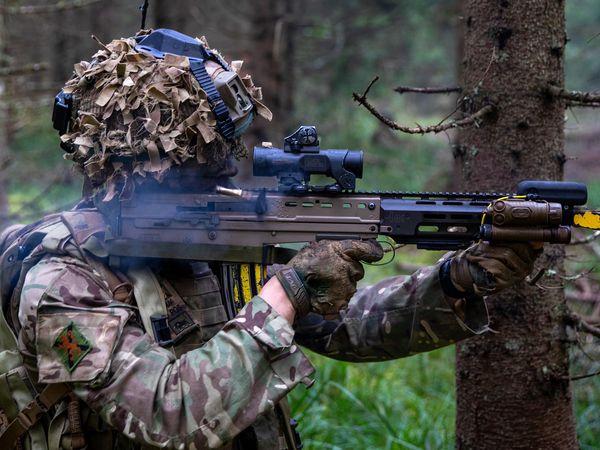
The Infantry are ready to protect the nation, prevent conflict, fight the nation’s enemies and deal with disaster at home or overseas.
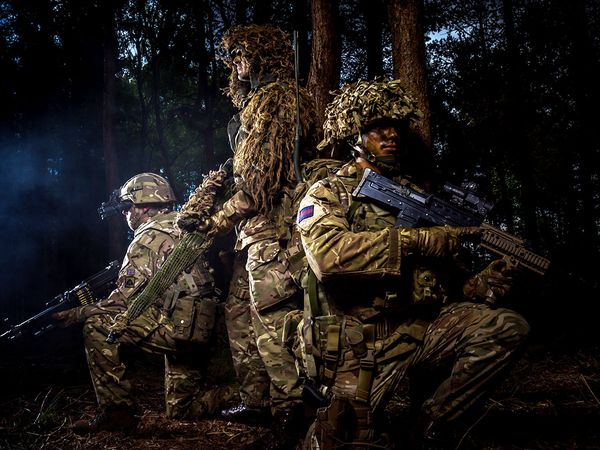
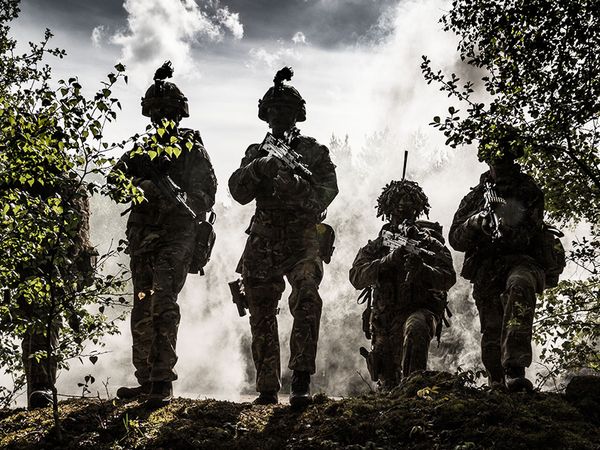
Join the Infantry Foot Guards and become a highly trained frontline Infantry soldier at the heart of the Army's combat capability. You'll develop the skills, fitness and resilience needed to operate in demanding environments, serving in agile light role infantry battalions, Light Mechanised forces or specialist units like the Land Special Operations Forces supporting operations at the forefront of NATO activity.
As a Foot Guard, you'll have opportunities to specialise in advanced infantry skills, gain leadership experience, train and deploy in the UK and overseas, and work alongside some of the Army's most capable soldiers. Whether conducting military operations, developing specialist combat skills or progressing into leadership roles, you'll be part of a close-knit team with a proud reputation for excellence.
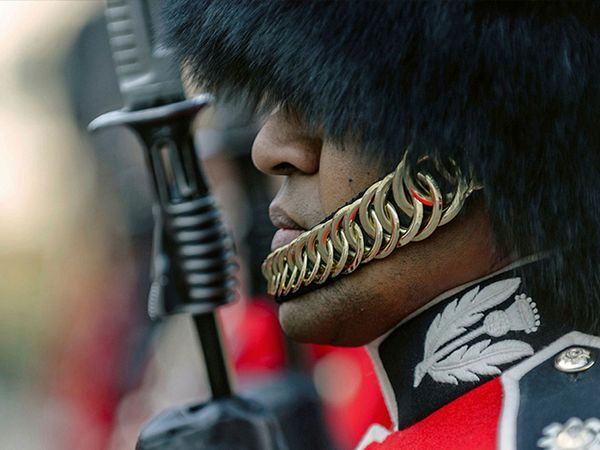
Alongside your operational duties, you'll also have the unique opportunity to represent the Army on the world stage through State Ceremonial and Public Duties, including events such as Trooping the Colour.
For a career that combines being a frontline soldier, adventure, leadership and opportunities around the world, join the Infantry Foot Guards.

Key responsibilities
Become a highly trained frontline Infantry soldier
Specialise in reconnaissance
Operate mortars, machine guns and anti-tank missile systems
Train as a junior non-commissioned officer, gain promotion and lead your fellow Guardsmen. Be the tip of the spear
Serve with the Guards Parachute Platoon as part of 16 Air Assault Brigade
Take part in state ceremonial events
Step 1
You start with a Combat Infantry Course (30 weeks) at The Infantry Training Centre Catterick. Here, you do your Basic Training and then your Infantry Initial Trade Training. Your instructors will coach you through progressive training where you will learn essential skills such as firing weapons, survival, first aid and map reading while building stamina and fitness.
If you’re aged under 17 years and 6 months, you’ll do the Basic Training (long) course at the Army Foundation College Harrogate. You’ll then go to Catterick to complete your Infantry Initial Trade Training over 12 weeks.
Step 2
On completion of your Initial Trade Training, you will move to your Foot Guards Battalion. Battalions routinely conduct training in the UK, Europe, Kenya and Belize. More concentrated periods of mission-specific training prepare Foot Guards battalions for operations abroad and State Ceremonial duties.
You'll earn £27,282 a year from the start of your training, which will go up as you progress throughout your career.
There are significant benefits including subsidised meals and low cost accommodation, as well as free medical and dental care. In addition, when deployed on exercise or on operations, normally you would not pay for either food or accommodation.
Vocational driving licences
Level 2 HM Forces Serviceperson (Protective Services) Apprenticeship
Leadership and Management qualifications to degree level
Assessor qualifications
Coaching and mentoring
Adventure Training Qualifications (Canoeing, Mountain Biking, Skiing, Mountain Climbing, Summer Mountain Training)
Parachuting Level 2
Computer Literacy and Information Technology Stage 1 (CLAIT)
Institute of Leadership and Management (ILM)
Degree opportunities
Your application journey
From application to training, you can expect a timeline of around 3-6 months.

Timelines can vary based on individual circumstances.
Online application
Complete your application form online. You'll need details about your education, work history, and why you want to join the Army.
Individual Careers Discussion
Meet with an Army Recruiter who will discuss your application, answer questions, and guide you through the next steps.
Medical Checks
Next you'll have your medical records checked. This could take some time as it's a really important step to make sure it's safe for you to join.
Assessment centre
Attend a 2-day residential assessment where you'll complete fitness tests, cognitive assessments, medical examinations, and team exercises.
Security clearance
Background and security checks are conducted. This can take longer depending on your personal circumstances and history.
Real Army Life
Ask a Soldier
Get honest answers from real soldiers in the roles you’re interested in. Read previously asked questions or ask your own.
The Infantry, it is the tip of the spear and of the highest operational importance to the British Army. Because of this the combat training you will receive is second to none. Obviously there are variables but as a whole being Infantry means that you would be the fittest, most robust and demonstrate the highest level skill at arms amongst your colleagues outside of the Infantry.
The great thing about this job is that after completing basic training, you have already become a specialist in combat.
Life in the Infantry is built around teamwork, training and being ready to deploy. It’s active, varied and focused on working closely with your team, whether you’re training in the UK or operating overseas.
Steven
Light Role Infantryman
Anybody who has a good general level of fitness will be absolutely fine. Basic training is about taking you from being fit to being Army fit.
You don’t need to arrive as a finished athlete. If you’re reasonably active and willing to put the effort in, you’ll improve quickly with training and support.
Greg H
Royal Military Police
Phase 1 training will gradually push your limits, both physically and mentally, and you learn a lot about what you’re capable of.
Basic training is where you learn the fundamentals of Army life, from fitness and discipline to teamwork and core soldiering skills. It’s challenging, but you’re supported every step of the way as you build confidence and resilience.
Tori C
Royal Army Medical Services
The challenges of an Infantry Soldier vary tremendously.
Everything you do for the first time will be a challenge… but that is the best part, you learn from it, grow and develop. In every role or rank you find yourself in there will be new challenges, more experience gained and with that much more job satisfaction. You are always learning.
You’ll face physical and mental challenges in the Infantry, from demanding training to operating in tough environments. But with the support of your team and the training you receive, you’ll build the confidence and resilience to overcome them.
Liam
Guardsman
There truly is no job like being in the Army, where colleagues become your friends.
You’re living, training and working with the same people, so friendships build very quickly.
Yes. Everyone starts in the same position, learning together and supporting each other. That shared journey makes it easy to form friendships and feel like you belong.
Kelvin R
Infantry
I was attached to an infantry unit and it is very physically demanding. As you can imagine, they are very fit and strong. But do not let it hinder you! I had a lot of fun and went on some very good exercises aboard with them
Women in the Infantry meet the same standards as everyone else, and the role is physically demanding. But with the right training, support and determination, many are succeeding and building strong, professional careers alongside their peers.
Holly
HR Specialist
Your future starts here
Every Infantry Guardsman started exactly where you are now. Take the first step.
Not ready to apply? Get in touch

Contact us


Find a careers centre

More roles like this
 Featured
Infantry Soldier
 Featured
Tank Crew
 Featured